
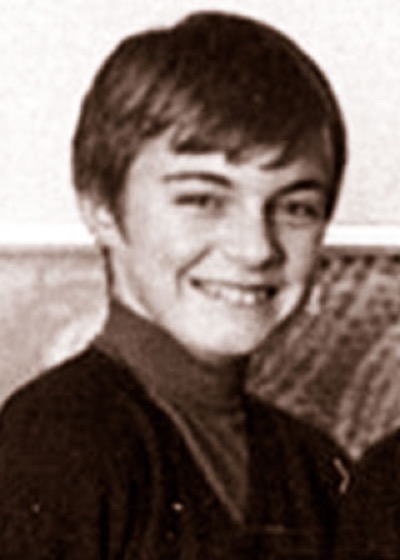
Paul Schwarz was placed as an indentured child from 1972 to 1976 by the guardianship authority, due to his parents' divorce, with appalling farming people in the municipality of Belp. What he had to endure and experience is almost unbelievable. Despite being highly intelligent, he was treated like the lowliest farmhand, barely allowed to do his homework, so that he finished secondary school with lower grades than he deserved. After completing his landscape gardening apprenticeship, Paul Schwarz emigrated to Canada, leaving behind a terrible childhood and a bitter memory of Switzerland, became self-employed, and later obtained the university degree he had missed out on.
Read more
I came into the world on 30 May 1960 at Münsingen district hospital. My mother was married to my father in her second marriage. She already had three daughters from her first husband. These were placed in homes or foster families. I thus grew up without siblings at home. My father leased a medium-sized farm in the municipality of Berne, which was also my home commune. From 1967 I attended primary school. My parents' marriage had been under strain for some time, and in 1971 they divorced. From 1969 to 1980 an official guardian was responsible for me. Since my mother was not considered capable of caring for me, and my father as a single farmer was now also unable to do so, I was subsequently placed in the Brünnenheim on the Dentenberg, where I attended the internal school. Each of my parents could visit me in the home once a month for a few hours. There the middle-school teacher made great efforts to prepare me for the secondary school entrance examination, which I then passed. From spring to autumn 1972 I attended secondary school in Worb. Since I lived a considerable distance from the secondary school, I had to be driven by car, which did not always work smoothly. The head of the home then told the guardian that they could no longer manage this and would have to find another placement for me. First, however, they wanted to see whether I would even remain at secondary school, since the first half-year was only provisional. I passed the trial period, and so the guardian placed me in autumn 1972 with a childless farming couple in the Gürbetal. From there I could cycle to secondary school in Belp. I had a good relationship with my classmates, and even though I did not stay until the end of year 9, I still receive invitations to class reunions today, and have managed to attend two of them.
The foster parents were very strict with me. I had to work like a farmhand. Wake-up at 5.30, first the barn, then school. Chores at midday too, then back to school, and even on afternoons free from school there was never a moment without work. After school, into the barn, supper, then finish in the barn. Lights out at 20.30 always, unless there was still late work to do – for example bringing in hay or straw in summer. This went on summer and winter, weekdays and Sundays alike. Even when there was genuinely no work, they always made sure I was kept busy. For instance, every free afternoon throughout entire winters I sawed all the firewood for us and the grandmother who lived on the upper floor into small pieces with a handsaw down in the cellar entrance, and then split it with an axe. That the same job could have been done in a few hours with a bench saw was never up for discussion. They simply could not and would not give me a free afternoon!
Of course there were also beatings in abundance. A small example: while the foster parents took their afternoon nap, my "lunchtime chores" were to feed the dog, water the three horses – since the horse stables had no automatic drinkers – muck out behind the cows, cattle, and calves, and mop the lower area. One day, shortly after I had come back up to the house, the foster mother went down to the lower stables. Unfortunately the dog had in the meantime left a small gift. She thought this was yet another example of my being too lazy to keep things clean. She called for me immediately. When I came down, she grabbed me by the hair, pushed my face into the dog's mess, and beat me with her free hand. Fortunately a neighbour who was cycling past and saw her mistreating me called something out to her, putting a stop to the whole thing.
Of course I was always to blame for everything and also always did everything wrong. There were beatings when the rubber boots wore out, beatings when the broom was worn down unevenly, beatings when I put kindling into the wood stove from the front instead of lifting the hotplate and inserting it from above, beatings when the horses didn't shine enough after grooming, and so on and so forth.
The farmer's wife's favourite punishment was to grab me by the hair and shake me back and forth. The consequence of this was that she pulled out my hair in handfuls. It then happened that my classmates teased me about it. "Are you going bald already?" they asked me. Since so much hair was missing from my head, the scalp was sometimes visible in patches. Even the hairdresser once stared at my head for quite a long time before asking a colleague, thinking I had mange. Because sometimes bits of scalp came away with the hair, blood crusts formed there. The farmer's wife also liked to use the riding crop on me. While holding me by the hair with her left hand so I could not flee, she would bring it down on my backside with her right. Afterwards the skin on my backside was always covered in bruised welts, and sometimes the skin even split open. It was always quite a matter to be able to hide those welts during physical education. Showering was therefore out of the question, and only once did a classmate raise the subject with me.
The farmer's favourite punishment method was to slap me across the face. I always had to stand completely straight in front of him so that he could hit me with full force. If I tried to defend myself or flinched away, the procedure was repeated until he was satisfied and declared that had been a good "Klapf" – a proper slap.
Once a month over the weekend I was allowed to go alternately to my father or my mother. For my foster parents, however, my father was nothing but a dirty little farmer, and my mother – who had struggled with mental health problems all her life and therefore received a disability pension – was nothing other than a lazy dirty whore. I, as the product of such a marriage, was worthless and would probably amount to nothing professionally beyond, perhaps, becoming a pimp. The farmer's wife was a devout Catholic, originally from central Switzerland, and in many things she always saw only the sexual dimension. She was herself presumably very sexually repressed, which, as I later established, greatly frustrated her husband. She constantly accused me of being a sadist who only made her angry out of malice because it gave me sexual gratification. She also constantly tried to catch me masturbating – she would burst into the bathroom, rip the shower curtain away from me while I was showering, or storm into my room late at night and pull my covers off. As twelve-year-old schoolboys we had of course already talked about one thing or another in the playground, but I still had to work out quite a few things from a school encyclopaedia. On several occasions I was threatened with preventive castration so that I would not father any children of my own. In retrospect this threat was surely not meant seriously, but as a 15-year-old who had already witnessed quite a lot, I did not know that. Their aim was to humiliate me as deeply as possible, to intensify my horror and reinforce my sense of inferiority.
At school I could only just scrape by. There was often simply not enough time to do homework. My reports were always adequate, which secured my place in secondary school, but never very good. The careers counsellor was therefore puzzled, after measuring my IQ, as to why my reports were so poor, since children with my level of intelligence usually ended up at the "Gymer" – the academic high school – and later at university. Something that also appeared in the guardianship report two years later.
I was finally able to view these files in January 2011 with the help of the association "netzwerk verdingt." Among other things, they contained, based on interviews with the foster parents, a quotation from 31 January 1974: "…that he is a little lazy and forgetful. They also often have difficulty getting him to do his homework." And from 5 March 1976: "he is of a very withdrawn, often also distracted nature, which the foster parents then interpreted as dishonesty and lack of willpower." In the files I could also read that in 1976 they received 300 francs per month in foster care payments plus health insurance premiums for me.
My situation was certainly discussed in the neighbourhood, but no one wanted to improve it. The farmer was a member of various clubs and committees and generally enjoyed a good reputation; people presumably did not want to interfere over a foster boy and risk a quarrel. But I do recall two incidents. Once I could hear the farmer's wife's brother, during a visit to the farm, having a row with her and saying it was not normal the way they treated me. He then stormed out of the house, bundled his family into the car, and drove home. We heard nothing from him for a long time afterwards. On another occasion a retired man – a neighbour who came to us for coffee almost daily, thereby seeing and hearing a good deal – made a similar remark. He too stopped coming to the house for many months.
In summer 1976, the calves broke out of the pasture one night. I was already in bed when the farmer came home from a meeting and noticed. He stormed furiously into my room and dragged me out of bed to help him catch them. He blamed me, of course, and I received a great deal of beating. When I was back in bed afterwards I knew this could not go on. I decided that same night to run away, put my clothes on, climbed out of the window, and cycled to my father. Out of sheer fear I did not show myself to my father until he received a telephone call at breakfast from Belp. He then went to the official guardian and succeeded in having the foster placement terminated. Until spring 1977 I lived with my father on the farm and attended secondary school in Bümpliz from there. For meals I alternated between the two sisters of my father who lived close by. In spring 1977 I began my landscape gardening apprenticeship. Since several apprentices were training at the same firm, we were housed in company rooms. Board and lodging were charged against our wages, and we received a small apprenticeship wage. I spent the weekends at my father's. After the apprenticeship I continued working in the trade in 1980 before and after recruits' school to earn some money. In 1981 I flew to North America and visited a Swiss farmer in Manitoba, Canada, whose father I knew from my apprenticeship. I first helped him with sowing the grain and then with the harvest in autumn. In summer and the following winter I travelled through Canada and the USA. I liked the country and the people very much. It was a more open society than in Switzerland, and I saw an opportunity to turn my back on my old life. When I returned to Switzerland in late winter 1982, I immediately applied to the Canadian embassy for immigration. In summer 1982 I emigrated to Canada definitively. In 1985 I founded my own landscape gardening business in Manitoba, which I still run today. I married in 1992 and we had a daughter in 1993 and a son in 1996. Because winters here are bitterly cold and gardening becomes impossible, I work as a ski instructor at a nearby small ski area.
Of the few people I have told about my life since then, there is always a similar question: "Why did you never tell anyone?" A question I ask myself today too. If I can make a comparison, it is with an abused dog that was chained its whole life. Because it cannot spring away and its fighting spirit was beaten out of it while still a puppy, it crawls into a corner as best it can and takes the blows with a whimper.
I always wanted somehow to get away from the Gürbetal, longing to count in my head the days, hours, even minutes and seconds until school was over and I could go to an apprenticeship or somewhere else. But I also always tried to be good, to work hard, so as not to be such a disappointment to the foster parents. I was also always angry at myself when I did something wrong. From that anger came a quick temper that I have not entirely overcome to this day. Deep in my soul I did love the foster parents, and somehow desperately tried to be loved by them too, because they were the only ones I could love. The comparison with the abused dog that nonetheless remains loyal to its owner despite the abuse is apt here too. That is probably also the reason why I endured the sexual assaults by the farmer. A loving relationship with my real parents, as I had had as a toddler and until I was eight, had long since ceased to exist, and given the sparse visiting opportunities it was almost an impossibility.
Although their childhoods had taken different courses and they described them differently, I nonetheless recognised similar feelings and experiences in the biographies of the other former contract children from the netzwerk-verdingt network. What a powerless feeling, to stand there merely as a "boy" or "girl" – a contract child – while the biological children receive "warmth of the nest" from their parents, and you yourself are left empty-handed.
The farmer died in 1982 of a stroke before he was even 50. She died of leukaemia in 1989. I stood at their grave and spoke the words: "I forgive you," since they say that if you do not forgive your tormentors, they continue to abuse you emotionally for the rest of your life. But in the four years I was placed there, what happened left too many scars on my soul. I did speak the words, but I know that deep in my soul the damage done is too great for me to ever fully forgive them. In that sense the abuse I suffered has, for me, never really stopped.
We take your experiences seriously - confidential and personal. Or support our work as a member.
This website uses only technically necessary cookies. More information in the Privacy policy.