
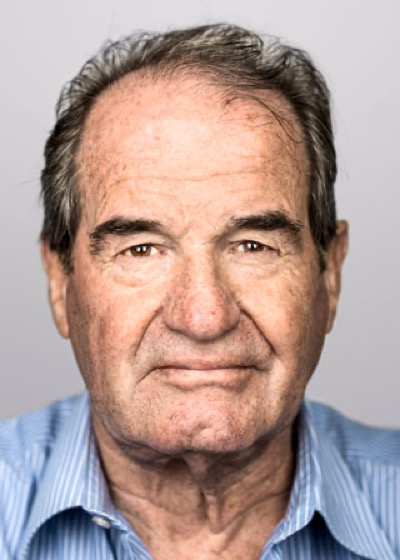
I was born on 19 January 1939 in the Berne women's hospital as an illegitimate child. My biological father was already divorced from his first wife at that time. From that marriage I have a half-sister. After receiving my files I searched for her for a long time, and recently found her with the help of two people with the same family name, and was finally able to meet her. My biological parents did eventually marry. From that marriage came a first sister in 1940, a second in 1941, and a younger brother in 1943. We lived in a flat in the Murifeld district of Berne at that time. I have no memory of my father,
because I was still a toddler.
When my father suddenly abandoned the family, we all received a guardian. But my mother fought fiercely on our behalf. In 1948 my three younger siblings were placed together as indentured children with a foster family in Feutersoey. I was still completing year 3 of primary school in Berne. In April 1949 two policemen turned up one day and wanted to take me away too for a placement ordered by the authorities. My mother being a stately woman, she threw the two policemen down the stairs from the raised ground floor. The following day three policemen appeared and enforced the authorities' verdict. But my mother accompanied me to the foster placement, also in Feutersoey. I was placed with a childless smallholding family and had to replace a farmhand from the very beginning, since the foster father was partially disabled. I was compelled to stay there until the end of my schooling.
School was only in winter. From spring to the end of autumn we were on the alpine pasture, where I continued to be exploited as an assistant alpine dairyman. At the valley farm, the day began at five in the morning with barn work. Since the farmer was a lazy dog, he usually only went to the barn at five in the afternoon, so mucking out, feeding, and work with the pigs often kept me going past nine in the evening as well. Then came supper. Only at ten at night did I have time for homework. Pure drudgery and exploitation. Because the farmer was a devious type, I was not allowed to milk the cows and only learned to do so later. I was not allowed to tell anyone about any of this.
The welfare worker from the Berne city youth office, Mrs Madörin, came only once a year, by prior appointment. I was specially dressed up for her visit and told not to complain. On that day I did not have to work and received a decent afternoon snack. I never saw my guardian during that period. The room they showed the "inspector" was one I myself had never been in. I slept in the unheated loft space. Despite his disability, the foster father was always ready and willing to mete out punishment and beatings.
At the end of my schooling I had actually wanted to train as a mechanic. Since an apprenticeship cost money in those days, that was out of the question. Only three types of occupation were open: chimney sweep, farmer, or gardener. So I opted for the farm training year. Mr Wyss from the Berne city youth office accompanied me to the chosen placement. On the long train journey into the French-speaking part he told me that I should have reported the grievances at the Feutersoey foster placement to Mrs Madörin, and then the authorities would have intervened. In doing so he ignored the fact that I had had no opportunity whatsoever to do so.
A childless farmer was willing to take me for the farm training year but made it a condition that I do my training at the Rüti near Bern, since he intended me as his successor on the farm. I spent the second training year on a farm in Bätterkinden. When I wanted to return to Geneva, the tractor driver of the large estate in Bätterkinden had an accident. The two farmers agreed that, at the Geneva farmer's request, I could not leave this temporary position until autumn due to the emergency. This Geneva farmer tried to reach me by telephone twice, and I should have called back. These calls were not passed on to me by the Bätterkinden farmer, out of self-interest, as he was unwilling to forgo my urgently needed labour. Because the house telephone was installed in the bedroom, these attempts at contact remained hidden from me. On the third call I happened to be present and was connected to the first master by the farmer's wife.
On learning of the outrageous situation and the underhanded deception, I became so furious that I decided to give up farming. I then obtained my lorry licence and worked for some years as a driver before becoming self-employed in 1964. After the family had been torn apart by the authorities' decision, we four children placed as contract children, and the marriage to my biological father dissolved, my mother stayed in Bern and worked as a cleaning woman. From her meagre wage she also had to pay for our keep. In the correspondence I found after her death, I established that she had fought for us children like a lioness. For that I am eternally grateful to her.
Read more
because I was still a toddler.
When my father suddenly abandoned the family, we all received a guardian. But my mother fought fiercely on our behalf. In 1948 my three younger siblings were placed together as indentured children with a foster family in Feutersoey. I was still completing year 3 of primary school in Berne. In April 1949 two policemen turned up one day and wanted to take me away too for a placement ordered by the authorities. My mother being a stately woman, she threw the two policemen down the stairs from the raised ground floor. The following day three policemen appeared and enforced the authorities' verdict. But my mother accompanied me to the foster placement, also in Feutersoey. I was placed with a childless smallholding family and had to replace a farmhand from the very beginning, since the foster father was partially disabled. I was compelled to stay there until the end of my schooling.
School was only in winter. From spring to the end of autumn we were on the alpine pasture, where I continued to be exploited as an assistant alpine dairyman. At the valley farm, the day began at five in the morning with barn work. Since the farmer was a lazy dog, he usually only went to the barn at five in the afternoon, so mucking out, feeding, and work with the pigs often kept me going past nine in the evening as well. Then came supper. Only at ten at night did I have time for homework. Pure drudgery and exploitation. Because the farmer was a devious type, I was not allowed to milk the cows and only learned to do so later. I was not allowed to tell anyone about any of this.
The welfare worker from the Berne city youth office, Mrs Madörin, came only once a year, by prior appointment. I was specially dressed up for her visit and told not to complain. On that day I did not have to work and received a decent afternoon snack. I never saw my guardian during that period. The room they showed the "inspector" was one I myself had never been in. I slept in the unheated loft space. Despite his disability, the foster father was always ready and willing to mete out punishment and beatings.
At the end of my schooling I had actually wanted to train as a mechanic. Since an apprenticeship cost money in those days, that was out of the question. Only three types of occupation were open: chimney sweep, farmer, or gardener. So I opted for the farm training year. Mr Wyss from the Berne city youth office accompanied me to the chosen placement. On the long train journey into the French-speaking part he told me that I should have reported the grievances at the Feutersoey foster placement to Mrs Madörin, and then the authorities would have intervened. In doing so he ignored the fact that I had had no opportunity whatsoever to do so.
A childless farmer was willing to take me for the farm training year but made it a condition that I do my training at the Rüti near Bern, since he intended me as his successor on the farm. I spent the second training year on a farm in Bätterkinden. When I wanted to return to Geneva, the tractor driver of the large estate in Bätterkinden had an accident. The two farmers agreed that, at the Geneva farmer's request, I could not leave this temporary position until autumn due to the emergency. This Geneva farmer tried to reach me by telephone twice, and I should have called back. These calls were not passed on to me by the Bätterkinden farmer, out of self-interest, as he was unwilling to forgo my urgently needed labour. Because the house telephone was installed in the bedroom, these attempts at contact remained hidden from me. On the third call I happened to be present and was connected to the first master by the farmer's wife.
On learning of the outrageous situation and the underhanded deception, I became so furious that I decided to give up farming. I then obtained my lorry licence and worked for some years as a driver before becoming self-employed in 1964. After the family had been torn apart by the authorities' decision, we four children placed as contract children, and the marriage to my biological father dissolved, my mother stayed in Bern and worked as a cleaning woman. From her meagre wage she also had to pay for our keep. In the correspondence I found after her death, I established that she had fought for us children like a lioness. For that I am eternally grateful to her.
We take your experiences seriously - confidential and personal. Or support our work as a member.
This website uses only technically necessary cookies. More information in the Privacy policy.