
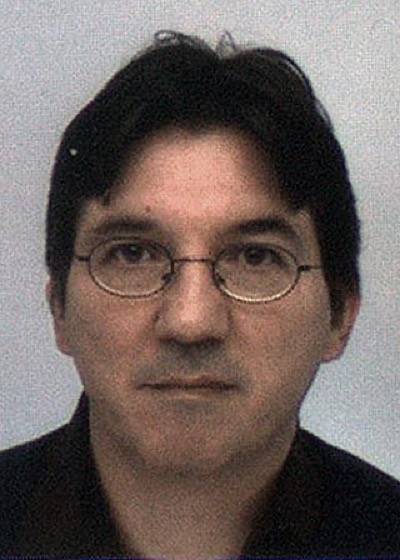
I was born in Zurich in 1964. My parents, both from northern Italy, came to Switzerland in the mid-1950s, where they met and fell in love. The four of us lived in a three-room flat in Zurich-Wiedikon. In my early years, the era of Schwarzenbach began – his initiative was narrowly rejected by the Swiss electorate in 1971. My parents feared that vote, not knowing where they would go with their two young children if they were expelled from Switzerland…
Read more
I sensed their fear but did not understand the reason. The slur “Tsching” followed me every single day in those years, together with the remark that my parents were stupid because they could not speak German properly. Over time, I began fighting back against the children who insulted my family.
I was sent to a special school and was supposed to remain there even after second grade. My limited Swiss teacher of the time was of the opinion that I was not capable of transferring to a mainstream class. My special-school report indeed showed only a bare “satisfactory” in arithmetic and writing – no other grades existed. A school psychiatrist, whom I still remember to this day, did consider me capable of attending a mainstream class, but his assessment was evidently ignored.
By chance, my father got to know a work colleague who sent his children to a children's home in Näfels run by Swiss nuns. In the Canton of Glarus I was allowed to attend a mainstream class and was “suddenly” a good pupil. I had to make an effort at school for the first time in my life, and I realised that one could actually learn something at school when it was not a special school! Decades later, my mother told me that she had once received a call from the special-school teacher, who suggested I should come back to Zurich. I would have to return to the special school, she said, but they would “look after” me well. My parents refused, and my mother burned my school report in anger – I had it reprinted decades later. It should be noted that the children's home was not free; my parents had to pay for me. A painter and a seamstress, they did not earn much, but they managed. They beamed with pride every time they saw my report, as my average grade was between 4.5 and 5. On the other hand, they argued regularly about money.
In Näfels I discovered something new. We children from the home were seen as “home children” – not quite full members of society, to put it politely. It made no difference whether a home child came from Italy or from Switzerland. This surprised me, because until I moved to Näfels I had always thought that the Swiss only had something against Italians. It seemed the Swiss also had something against certain other Swiss? Many of those Swiss home children became my friends and often supported me, just as I supported them.
In sixth grade we were given a teacher called Müller. In his view, the brightest pupils sat in the back row (where I sat) and those he disliked sat alone in the front rows. He always addressed a slightly chubby boy as “potato sack”; that boy became my friend, and I could see that he suffered greatly from it. At the end of year 6, everyone had to sit a cantonal examination. Those who scored between 4.5 and 5, and had the same average in their report, were allowed to move to secondary school – and I made it. However, there was also a monastery school for boys in Näfels at the time, requiring a further entrance exam. Some of my fellow home residents who attended it advised me against applying. Their reasoning: anyone who has to live with nuns does not also need to go to school with monks! Going into the exam with that conviction was enough for me to be the only pupil from Näfels to fail the monastery school entrance exam – by a wide margin. What a disgrace from the nuns' perspective, and what a joy from mine. On top of that, we boys received a new nun who did not suit me at all – nor I her. The result was that I was expelled both from secondary school and from the children's home. The verdict was: either she (the nun) or I had to go, and the choice did not fall on me by accident.
After five years in a children's home, I spent nearly three more years in a so-called Catholic institution for boys called the Alpine School Vättis. The school stood next to the residential building and, by today's standards, one would speak of a three-year lockdown – one considerably stricter than anything Switzerland experienced during the COVID pandemic. No one noticed this small detail except the inmates themselves! In secondary school I performed well again, and at least half the class copied my French homework. Our class went down in the annals as the worst class ever. We actually booed a teacher once and sang “Grappa a la mela” (to the tune of “Guantanamera”) to musically underline his alcohol consumption – and the smell of it. A supervisor once hit me in front of the class because, when he said he could not see me standing in front of the blackboard because of my long hair, I replied that that was fine since it meant one fewer idiot to look at. There was also a maths teacher we called “Knacki.” He suffered from muscular dystrophy if I remember correctly, and was fond of hitting – though he only hit me once. Otherwise he insulted the pupils he considered stupid by saying their brains were only good as hair tonic. In contrast, the history teacher suffered from bone disease and was proud of being one or two centimetres taller than Napoleon. Despite his illness he was fair, and since I had always enjoyed history I studied willingly – and over time almost the entire notorious class 2b joined me. In that subject we even outperformed the parallel class for once. What certain teachers got away with, nobody noticed yet again, and the head of the institution liked to see himself as an uncle – the title he wished to be addressed by – much like a certain Herr Mengele decades earlier.
In my third year of secondary school I had a grade average of 5 and wanted to begin a commercial apprenticeship in Zurich. In 1981 I returned to that city, but no one wanted to hire a former home child – though only one person said so to my face. I found this supposedly free world to be unfree, because in my view almost everyone hid their feelings behind a façade. A free world, I felt, should be made up of people who move through it openly – and that was clearly not the case. By chance, and thanks to a personnel manager who was merely waiting for his pension and responded very late, I eventually found a placement as a commercial apprentice.
At that time the youth movement was also active in Zurich, and at some point I let my hair grow longer too. One day when I arrived late at school again, a teacher asked whether I had spent the night at the AJZ (the autonomous youth centre). A school friend replied that couldn't be, since he hadn't seen me there the previous night. I finished that training reluctantly and spent the following years mostly working on a temporary basis in the accounts departments of various companies. Constantly adapting to new environments helped me grow and made me better.
One day I was working alongside a student from the University of Zurich and told him I would also like to study. He suggested I enrol at the KME (Cantonal Matura School for Adults) in Zurich. I did not know the school, but I applied. The entrance examination required passing two subjects – mathematics and French – within a maximum of two attempts each. I passed mathematics on the first attempt and French on the second, since it had been more than ten years since I had studied it at school.
I had not believed I was capable of the Gymnasium, but I was proved wrong. This made me angry at the Swiss school system – which had forced me into an educational odyssey I would very gladly have done without and which had given me the worst years of my life – and angry at myself for having taken so long to realise I was capable. I decided to complete the course with the absolute minimum of 60 points. With 61 points I just fell short of that goal. I should add that even with the right attitude I would have reached no more than around 70 points.
My career ambitions included special education teacher, historian, or oenologist. I chose the third option and it turned out to be a poor choice. Perhaps one should not always pursue one's passion as a profession. Ultimately I did not complete that degree. Later, my mother became seriously ill and I wanted to help her. We all die eventually, but the question is how – and that can make a difference. Unfortunately, no team could be assembled that was willing to help my mother, who was suffering from both breast cancer and dementia. She was placed in a locked care home on "Paradiesstrasse" ("Ante-chamber of Hell Street" would be a more apt name) in Zurich. During my visits she often asked me what she had done wrong for someone to throw her in prison. She thus experienced shortly before her death what I had gone through as a child – without ever becoming aware of the connection. Children and sick elderly people are the most vulnerable, not only in Switzerland!
Later, a colleague suggested I begin studying history at the University of Zurich. As of 2023, a seminar paper still stands between me and starting my bachelor's thesis. What I intend to specialise in should be clear to everyone…
Justiz & Familienrechtsaufsicht Swiss
Schöneggstrasse 16
8004 Zürich-Switzerland
office@jfswiss.ch
043 540 47 47
We take your experiences seriously - confidential and personal. Or support our work as a member.
This website uses only technically necessary cookies. More information in the Privacy policy.